PSYCHOLOGY · DEVELOPMENT · PRACTICAL SOLUTIONS

Our lives are shaped every day by many different forces.

Health, mind, relationships, family, friends, work, studies, past experience and plans for the future. All of it is interconnected, yet far from everything can be discussed deeply even with people close to us. Sometimes you need an outside perspective to look at life as a whole, see the connections and understand what can actually change.

NEWSLETTER

Science of the mind in your inbox

A few times a week: how the brain, body and environment shape behaviour and decisions — without mysticism, with sources. Join the waitlist to hear when it launches.

Join the waitlist

SYSTEMS VIEW

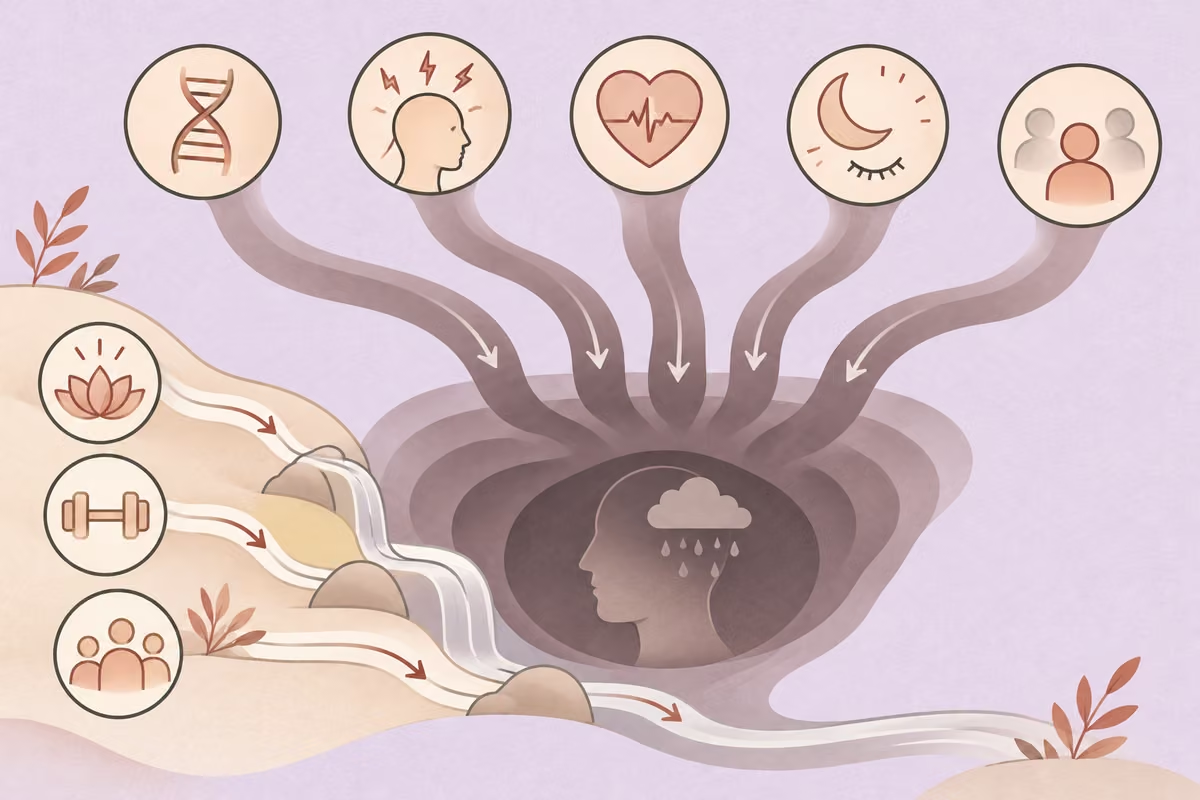
More than one factor affects the mind

Our psychological state, behavior and decisions are shaped by many interconnected factors — from the brain and body to relationships, environment and life circumstances.

  • Biology and genetics
  • Brain and neurobiology
  • Physical condition
  • Individual psychology
  • Past experience
  • Emotional state
  • Family and close relationships
  • Social and educational environment
  • Material conditions and finances
  • Culture, society and geopolitics

PORTRAIT / 2024

More than 15 years in psychology and working with people. A psychology degree from HSE University, four years of training at the Moscow Gestalt Institute, with specialization in long-term therapy of personality disorders and short-term trauma therapy.

In parallel, I spent many years in business — from startups and B2B marketing to building processes, hiring IT specialists and working with investors in medical projects. This blend of psychology and entrepreneurial experience helps me look at problems not only through emotions and relationships, but also through decisions, systems and real-life constraints.

Portrait of Dmitry Malykhin

BRAIN AND BEHAVIOUR

How the systems that shape our state actually work

The mind is tied to the work of many brain systems, as well as to the body, memory, attention and the response to threat. These structures have different functions, but in real life they do not act in isolation — they operate as one connected system.

Diagram of the brain: external view and sagittal cross-section with key structures labelled

None of these structures works in isolation. Behaviour and mental state emerge from the interaction of many brain systems, the body and the environment.

MY APPROACH

Psychology without mysticism

I see psychological work not as talking about something abstract, but as changing the way the brain, body, memory, emotions and behaviour respond to what is happening.

A SIMPLE EXAMPLE

Why the threat system sometimes fires too often

The amygdala takes part in detecting significant threats and triggering defensive reactions. After a hard or traumatic experience, the threat-detection system can become too sensitive.

The brain can then respond to objectively safe situations as if they were dangerous.

The job of psychological work is not to "turn off" emotions or the amygdala, but to help the system tell more accurately where a real threat exists now, and where the reaction is being driven by past experience.

Like a fire alarm that, after a real fire, starts going off because of the toaster.

Depending on the task, this can involve work with memory, cognitive and exposure-based approaches, EMDR and other methods.

The brain is an important part of the system, but not the whole system. A person's state is also shaped by the body, sleep, relationships, social environment, life experience and current circumstances.

NEWSLETTER

Science of the mind in your inbox

A few times a week: how the brain, body and environment shape behaviour and decisions — without mysticism, with sources. Join the waitlist to hear when it launches.

Join the waitlist

BLOG

Also read on the blog

All blog posts →