Depression and Physical Illness: Thyroid, Diabetes, Heart, Stroke
Which physical illnesses can cause depression or mimic it: thyroid disease, diabetes, anaemia, heart disease, stroke, chronic pain, infections, long COVID and medication — and why a check-up matters.
Contents
- Why physical illness is linked to depression
- Thyroid
- Diabetes
- Anaemia and deficiencies
- Heart and blood vessels
- Stroke
- Chronic pain
- Neurological conditions
- Infections and inflammation
- Hormonal changes
- Cancer
- Medication
- Tests a doctor may order for depression
- Why it matters to treat both the depression and the physical illness
- How I can help
- Frequently asked questions
- Can the thyroid cause depression?
- What blood tests should I have for depression?
- Can you get depression after a stroke?
- Can you get depression after COVID?
- Can medication cause depression?
- When should I seek help urgently?
- About the author
- Sources
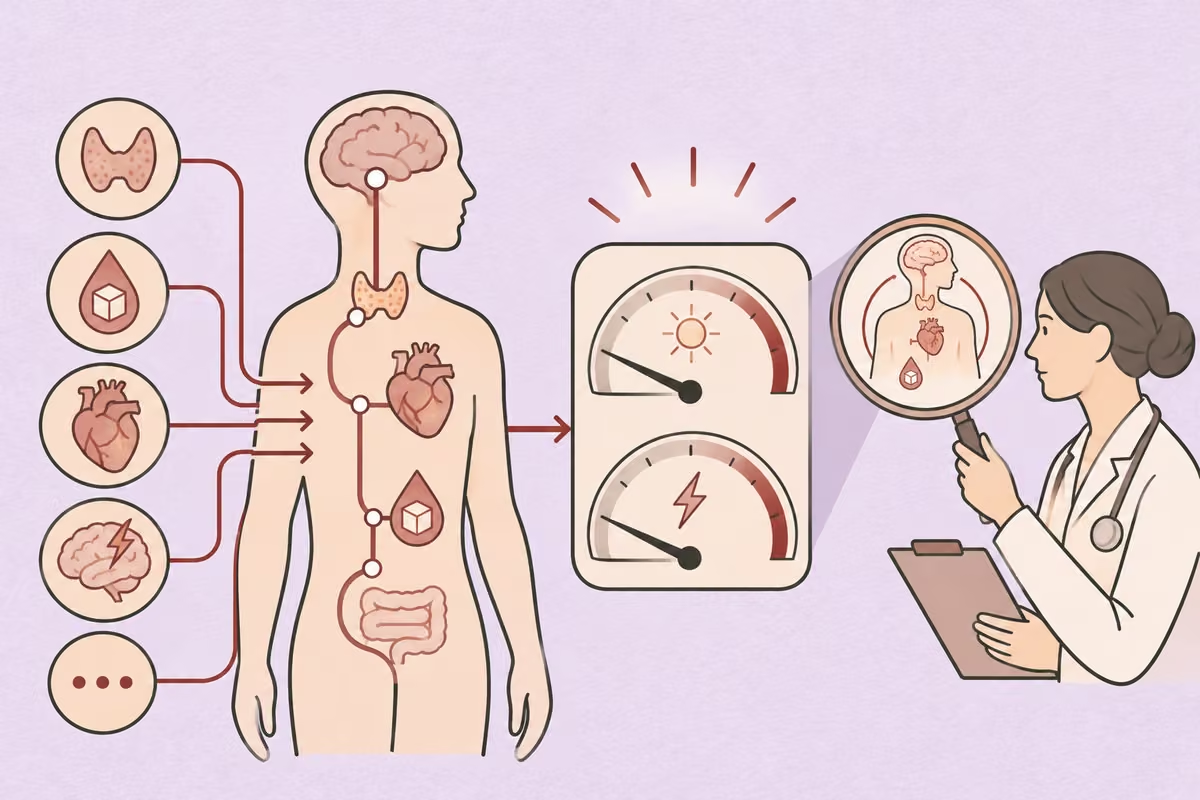
In short: depression and physical illness are closely linked in both directions. Many chronic illnesses — diabetes, heart disease, stroke, chronic pain, neurological conditions — raise the risk of depression one and a half to three times. Some conditions, such as an underactive thyroid, anaemia or vitamin B12 deficiency, cause symptoms that look very much like depression. And depression itself worsens the course of physical illness. So if you are depressed, a doctor may order tests, and if you live with a chronic illness, it is important to pay attention to your mood.
Why physical illness is linked to depression
- A direct effect on the brain. Hormones, inflammation, problems with blood supply and metabolism all affect how the brain works and how we feel.
- Psychological burden. The diagnosis itself, pain, limitations, fear for the future, the loss of a former way of life.
- Shared mechanisms. Chronic stress and inflammation play a part both in depression and in many physical illnesses.
- Medication. Some drugs can cause low mood as a side effect.
In a 2007 study by Saba Moussavi and colleagues, based on WHO data from 60 countries, depression combined with a chronic illness damaged health more than any illness on its own.
Thyroid
- An underactive thyroid (hypothyroidism) causes fatigue, slowness, low mood, memory problems and weight gain. This looks very much like depression.
- An overactive thyroid (hyperthyroidism) more often causes anxiety and irritability, but sometimes low mood as well.
Diabetes
Depression is roughly twice as common in people with diabetes. Depression in turn makes it harder to control blood sugar and stick to diet and treatment.
Anaemia and deficiencies
- Anaemia and iron deficiency cause weakness, fatigue, difficulty concentrating and low mood.
- Vitamin B12 and folate deficiency can cause low mood, memory problems and neurological symptoms.
- Observational studies have found a link between low vitamin D and depression, but there is not enough evidence that taking supplements treats depression.
Tests and supplements are worth discussing with a doctor.
Heart and blood vessels
- About one in five people develop depression after a heart attack.
- Depression increases the risk of cardiovascular disease and worsens the outlook after a heart attack.
- Disease of the small blood vessels in the brain is linked to late-life, so-called vascular depression in older adults.
Stroke
Post-stroke depression develops in about a third of people after a stroke. It is linked both to brain damage and to sudden limitations. Depression slows recovery, so it is important to detect and treat it during rehabilitation.
Chronic pain
Depression and pain share mechanisms in the brain and amplify each other. Treating only one of them often works worse than treating both.
Neurological conditions
Depression often accompanies Parkinson's disease, multiple sclerosis, epilepsy, migraine, dementia and the after-effects of traumatic brain injury. Sometimes depression is one of the first signs of a neurological illness. Depression and dementia in older adults are covered in "Depression in Women, Men and Older Adults".
Infections and inflammation
- During any acute infection a person becomes sluggish and loses interest and the wish to socialise. This "sickness behaviour" is a normal reaction of the body.
- Chronic inflammation is associated with depression.
- HIV infection significantly raises the risk of depression, through its effect on the brain, stigma and stress.
- After COVID-19, some people have a higher risk of depression and anxiety. In a 2021 study by Maxime Taquet and colleagues covering more than 230,000 patients, the risk of psychiatric disorders in the six months after COVID was higher than after flu.
Hormonal changes
- The menstrual cycle, pregnancy, childbirth and menopause can all affect mood — see "Depression in Women, Men and Older Adults".
- Low testosterone in men can come with low mood and fatigue.
- Excess cortisol in Cushing's syndrome often causes depression.
Cancer
Depression affects a significant share of people with cancer. It is linked to the stress of the diagnosis, treatment, pain and fatigue. It is just as important to detect and treat as the cancer itself.
Medication
Some medicines can cause low mood as a side effect: certain hormonal drugs, corticosteroids, and some medicines for blood pressure, neurological and infectious diseases. If you notice a change in mood after starting a new medicine, discuss it with your doctor. Do not stop taking it on your own.
Tests a doctor may order for depression
The decision is the doctor's, but common checks include:
- a full blood count;
- thyroid hormones;
- blood glucose;
- vitamin B12, folate and ferritin;
- liver and kidney function;
- other tests and examinations if there are specific reasons.
Why it matters to treat both the depression and the physical illness
- Depression makes it harder to stick to treatment, reduces physical activity and disrupts sleep and eating.
- Treating depression improves quality of life and can improve the course of the underlying illness.
- Treating the physical illness sometimes lifts depression, but not always: often both need treatment.
How I can help
In online support for adults, I help people with chronic illnesses cope with depression, anxiety, grief for their former life, and limitations. I always recommend staying under the care of their own doctor at the same time.
Frequently asked questions
Can the thyroid cause depression?
Yes. An underactive thyroid causes fatigue, slowness, low mood and memory problems that closely resemble depression. That is why thyroid hormones are often checked in people with depression.
What blood tests should I have for depression?
The decision is your doctor's. Common tests include a full blood count, thyroid hormones, glucose, vitamin B12, folate and ferritin, to rule out physical causes of similar symptoms.
Can you get depression after a stroke?
Yes. Post-stroke depression develops in about a third of people after a stroke. It slows recovery, so it is important to detect and treat it during rehabilitation.
Can you get depression after COVID?
Yes. Research shows that some people have a higher risk of depression and anxiety after COVID-19. If low mood persists after the illness, see a doctor.
Can medication cause depression?
Some medicines can cause low mood as a side effect. If you notice a change in mood after starting a new medicine, discuss it with your doctor and do not stop it on your own.
When should I seek help urgently?
If you have thoughts of suicide or of harming yourself, do not wait for a scheduled appointment: contact your local emergency services or a 24/7 crisis line.
About the author
More than 15 years in psychology and working with people. Degree in psychology from HSE University, four years of training at the Moscow Gestalt Institute, specialisation in long-term therapy of personality disorders and short-term trauma therapy. I provide online support for adults.
Sources
- Moussavi S. et al. Depression, chronic diseases, and decrements in health: results from the World Health Surveys. The Lancet, 2007.
- Anderson R. J. et al. The prevalence of comorbid depression in adults with diabetes: a meta-analysis. Diabetes Care, 2001.
- Thombs B. D. et al. Prevalence of depression in survivors of acute myocardial infarction. Journal of General Internal Medicine, 2006.
- Hackett M. L., Pickles K. Part I: frequency of depression after stroke: an updated systematic review and meta-analysis of observational studies. International Journal of Stroke, 2014.
- Taquet M. et al. 6-month neurological and psychiatric outcomes in 236 379 survivors of COVID-19: a retrospective cohort study using electronic health records. The Lancet Psychiatry, 2021.
- Hage M. P., Azar S. T. The link between thyroid function and depression. Journal of Thyroid Research, 2012.
- National Institute for Health and Care Excellence. Depression in adults with a chronic physical health problem: recognition and management (CG91). 2009.
This article is for educational purposes only and does not constitute medical advice, a diagnosis or a treatment recommendation. The symptoms and methods described are meant to help you understand the topic; only a doctor or qualified professional can assess your condition, make a diagnosis and recommend treatment after an individual consultation.