Depression, Anxiety and Addiction: Why They So Often Go Together
Why depression and anxiety so often occur together, what anxious depression is, and how stress, panic, OCD, PTSD and alcohol are linked to depression — and why they are best treated together.
Contents
- How anxiety differs from depression
- Why anxiety and depression go together
- Anxious depression
- Stress and depression
- Panic attacks and depression
- OCD and depression
- PTSD and depression
- Social anxiety and depression
- Alcohol and depression
- How they are linked
- Alcohol-induced depression
- Hangovers
- Other substances and addictions
- How co-occurring depression, anxiety and addiction are treated
- How I can help
- Frequently asked questions
- How is anxiety different from depression?
- What is anxious depression?
- Can stress cause depression?
- What is alcohol-induced depression?
- Does alcohol help with depression?
- When should I seek help urgently?
- About the author
- Sources
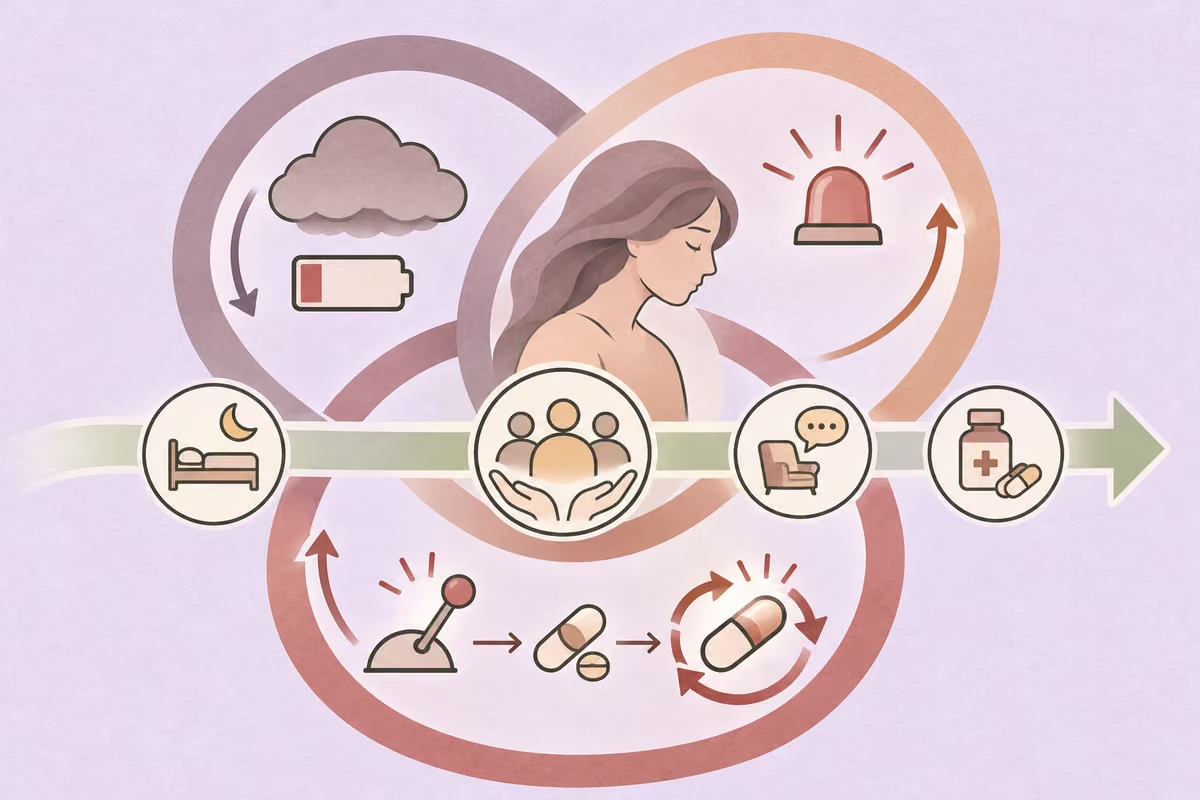
In short: depression, anxiety and addiction often go together. About half of people with depression also have an anxiety disorder at some point in their lives, and many people with anxiety disorders go on to develop depression. They share common causes: genetics, chronic stress, how the brain works, and difficult life experiences. When depression comes with marked anxiety, it is called anxious depression; it is harder to live with and needs particular attention. Many people use alcohol and other substances to dull anxiety and despair, but over time these make both worse. When the conditions occur together, it is important to treat them together.
How anxiety differs from depression
- Anxiety looks to the future: worry, fear, expecting the worst, tension, a sense of threat.
- Depression is more about loss: low mood, hopelessness, loss of interest and energy.
- With anxiety, a person is often keyed up and unable to relax. With depression, they are drained and slowed down.
But the two share a lot: poor sleep, difficulty concentrating, irritability, fatigue, dark thoughts. That is why they are easy to confuse.
Why anxiety and depression go together
- Shared genes. Twin studies show that much of the genetic vulnerability to anxiety and depression is the same.
- A shared mechanism: an overloaded stress system.
- Long-term anxiety is exhausting. A person who lives in tension for years, avoids situations and narrows their life gradually becomes hopeless and depressed.
- Shared thinking habits: a tendency to ruminate and to catastrophise.
How anxiety works in the brain is explained in "Anxiety for No Reason: What Happens in the Brain".
Anxious depression
The American classification DSM-5 includes the specifier "with anxious distress". It applies when depression comes with at least two of these signs:
- feeling keyed up or tense;
- feeling unusually restless;
- difficulty concentrating because of worry;
- fear that something awful may happen;
- feeling that you might lose control of yourself.
Anxious depression is usually more severe, responds less well to treatment and is linked to a higher risk of suicide. That is why it is important to tell your doctor about anxiety.
ICD-10 also includes "mixed anxiety and depressive disorder", used when both anxiety and depression are present but neither is strong enough for a separate diagnosis.
Stress and depression
Acute stress is a normal reaction that helps us deal with a threat. Chronic stress, lasting months or years, overloads the body's stress system and raises the risk of depression. Stress linked to loss, humiliation and a sense of being trapped with no way out is especially harmful.
Panic attacks and depression
Panic attacks are sudden surges of intense fear with a pounding heart, shortness of breath, dizziness, and fear of dying or losing control. Depression often develops in people with panic disorder: living in constant fear of the next attack, they start to restrict their lives.
OCD and depression
In obsessive-compulsive disorder, a person is tormented by intrusive thoughts and performs rituals to relieve the anxiety. Depression develops in a significant share of people with OCD. When it is present, it needs treatment, because it drains the strength needed to work on the obsessions.
PTSD and depression
Depression is very common after psychological trauma — it affects about half of people with post-traumatic stress disorder.
Social anxiety and depression
Fear of being judged and avoiding social contact lead to loneliness and isolation, which are among the strongest risk factors for depression.
Alcohol and depression
How they are linked
- Many people drink to ease anxiety, numb despair or get to sleep.
- It helps briefly, but alcohol depresses the nervous system, disrupts sleep and makes anxiety and low mood worse the next day.
- Regular drinking raises the risk of depression, and depression raises the risk of problem drinking.
- The combination of depression and alcohol significantly increases the risk of suicide.
Alcohol-induced depression
This is low mood caused by drinking or by stopping drinking. Its distinguishing feature is that it often improves noticeably after a few weeks of sobriety. If depression persists longer, it is probably independent and needs its own treatment.
Hangovers
Low mood, anxiety and guilt after drinking — sometimes called "hangxiety" — come from alcohol's effect on the brain and on sleep. If this keeps happening, it is worth thinking about how alcohol is affecting your life.
Other substances and addictions
- Cannabis can relax you for a while, but regular use, especially in adolescence, is linked to a higher risk of depression and anxiety.
- Smoking is associated with higher levels of depression and anxiety, and according to a 2014 review by Gemma Taylor and colleagues, quitting is associated with improved mood.
- Misusing sedatives without a doctor's prescription leads to dependence and can worsen depression.
- Behavioural addictions — gambling, social media, binge eating — are also often linked to depression: they become a way of avoiding painful feelings.
How co-occurring depression, anxiety and addiction are treated
- It is important to treat all the conditions at the same time. If only the depression is treated while anxiety and addiction remain, depression often returns.
- Cognitive behavioural therapy is effective for both depression and anxiety disorders.
- A psychiatrist may prescribe medication for depression and anxiety. Some medicines help with both.
- Addiction needs specialised help: addiction medicine, psychotherapy, support groups.
- Stopping alcohol and other substances is an important part of treating depression.
Practical steps you can take on your own are described in "How to Get Out of Depression on Your Own".
How I can help
In online support for adults, I work with combinations of depression, anxiety and traumatic experience: I help reduce tension, work with avoidance, worry and rumination, and find healthier ways to cope with painful feelings. With addiction, I recommend seeing a specialist in parallel.
Frequently asked questions
How is anxiety different from depression?
Anxiety looks to the future: worry, fear, tension. Depression is more about loss: low mood, hopelessness, loss of interest and energy. But they share many symptoms and often occur together.
What is anxious depression?
It is depression with marked anxiety: tension, restlessness, fear that something terrible will happen. It is usually more severe, so it is important to tell your doctor about the anxiety.
Can stress cause depression?
Yes. Chronic stress overloads the body's stress system and significantly raises the risk of depression, especially when it involves loss, humiliation or a sense of being trapped.
What is alcohol-induced depression?
It is low mood caused by drinking or by stopping drinking. It often improves noticeably after a few weeks of sobriety. If depression persists longer, it is probably independent of the alcohol.
Does alcohol help with depression?
No. Alcohol dulls painful feelings for a short while, but it disrupts sleep, worsens anxiety and low mood and significantly increases the risk of suicide.
When should I seek help urgently?
If you have thoughts of suicide or of harming yourself, do not wait for a scheduled appointment: contact your local emergency services or a 24/7 crisis line.
About the author
More than 15 years in psychology and working with people. Degree in psychology from HSE University, four years of training at the Moscow Gestalt Institute, specialisation in long-term therapy of personality disorders and short-term trauma therapy. I provide online support for adults.
Sources
- Kessler R. C. et al. Anxious and non-anxious major depressive disorder in the World Health Organization World Mental Health Surveys. Epidemiology and Psychiatric Sciences, 2015.
- Fava M. et al. Difference in treatment outcome in outpatients with anxious versus nonanxious depression: a STAR*D report. American Journal of Psychiatry, 2008.
- Kendler K. S. et al. The structure of genetic and environmental risk factors for common psychiatric and substance use disorders in men and women. Archives of General Psychiatry, 2003.
- Boden J. M., Fergusson D. M. Alcohol and depression. Addiction, 2011.
- Taylor G. et al. Change in mental health after smoking cessation: systematic review and meta-analysis. BMJ, 2014.
- Gobbi G. et al. Association of cannabis use in adolescence and risk of depression, anxiety, and suicidality in young adulthood. JAMA Psychiatry, 2019.
- Flory J. D., Yehuda R. Comorbidity between post-traumatic stress disorder and major depressive disorder. Dialogues in Clinical Neuroscience, 2015.
This article is for educational purposes only and does not constitute medical advice, a diagnosis or a treatment recommendation. The symptoms and methods described are meant to help you understand the topic; only a doctor or qualified professional can assess your condition, make a diagnosis and recommend treatment after an individual consultation.