Depression or Something Else? Apathy, Burnout, Hidden Depression
How to tell depression from apathy, laziness, sadness, grief and burnout, and how to recognise hidden, smiling and high-functioning depression.
Contents
- Apathy and depression: what is the difference
- Laziness or depression
- Sadness or depression
- Grief or depression
- Burnout or depression
- Hidden depression
- Smiling depression
- High-functioning depression
- Masked, or somatised, depression
- Signs of hidden depression
- Why hidden depression is dangerous
- Other conditions that can look like depression
- When to see a professional
- How I can help
- Frequently asked questions
- How is apathy different from depression?
- How can I tell whether it is laziness or depression?
- How is burnout different from depression?
- What is smiling depression?
- What is high-functioning depression?
- About the author
- Sources
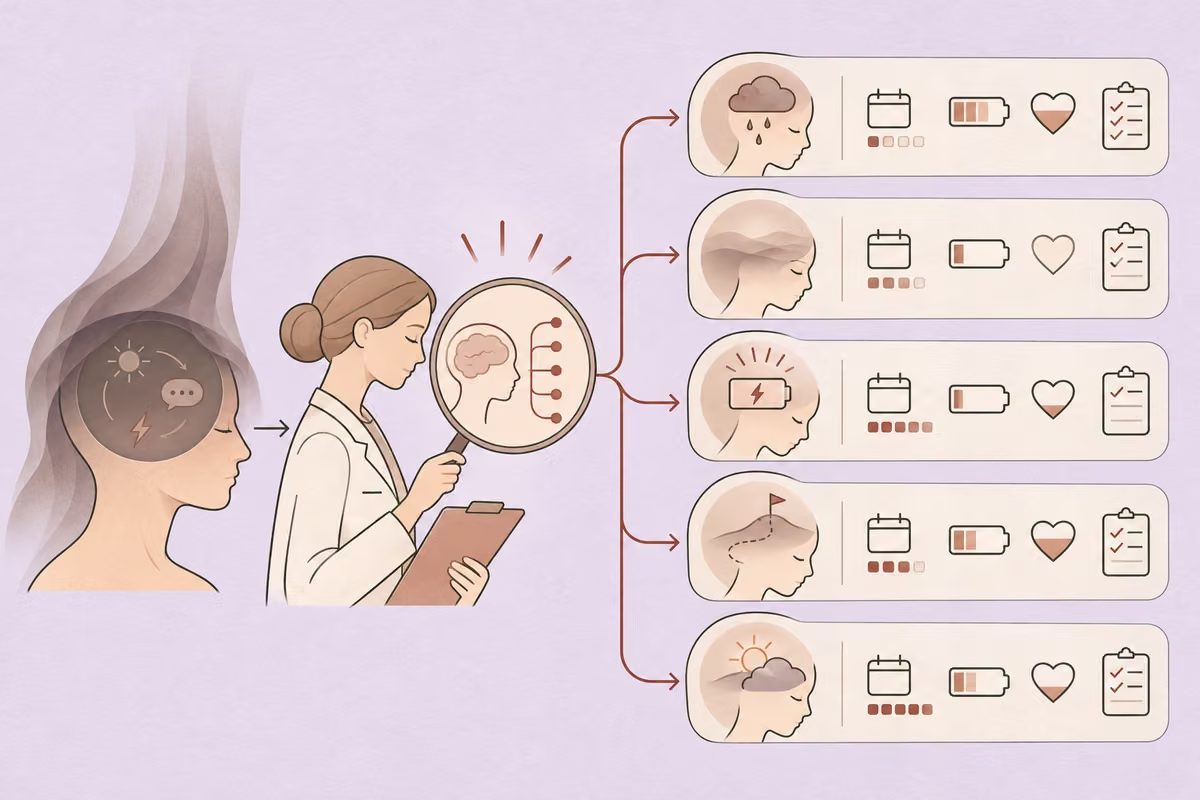
In short: depression is often confused with other states. Apathy is a symptom, not an illness in itself, and it can come with depression, burnout or physical illness. Laziness is usually selective: you do not want to do unpleasant things, but what you love still brings joy — in depression, joy fades from everything. Sadness and grief are natural reactions to loss: they come in waves with moments of relief, and self-respect stays intact. Burnout is tied to work and eases with a long rest, while depression spreads to the whole of life. A separate problem is hidden, or "smiling", depression: the person looks fine and keeps working but feels low and empty inside. It is not an official diagnosis, but it is a real and dangerous state.
Apathy and depression: what is the difference
Apathy is indifference, an absence of wishes and drive, emotional flatness.
- Apathy is a symptom. It occurs with depression, burnout, chronic sleep deprivation, thyroid disease, anaemia, neurological conditions, after severe infections and with some medications.
- Depression is a disorder that includes not only apathy but also low mood, guilt, sleep and appetite problems, and thoughts of death.
- With apathy alone, a person usually feels no emotional pain — they simply "don't care". In depression, indifference is often joined by anguish, self-criticism and suffering.
If apathy lasts more than two weeks, it is worth seeing a doctor to find its cause.
Laziness or depression
- Laziness is selective: you do not want to do boring or unpleasant things, but favourite activities still bring pleasure.
- In depression you want nothing at all, including what used to make you happy, and every effort costs enormous strength.
- Laziness passes after rest; depression does not.
- Laziness rarely comes with strong guilt and hopelessness. In depression they are common: the person scolds themselves for being "lazy", and that only deepens the low mood.
If you keep blaming yourself for laziness but cannot do anything about it, and nothing brings joy, it may not be laziness at all.
Sadness or depression
- Sadness has a specific cause, passes within hours or days and does not stop you enjoying good things.
- Depression lasts for weeks, persists regardless of events and affects sleep, appetite, energy and self-esteem.
Grief or depression
After losing someone close, longing, crying, poor sleep and loss of interest are normal reactions. How grief differs from depression:
- in grief, pain comes in waves linked to memories, with relief and even moments of joy in between;
- self-respect is preserved, and guilt is usually tied to specific situations with the person who died;
- in depression, low mood is constant and the person sees themselves as worthless overall.
Grief can turn into depression. ICD-11 and DSM-5-TR also describe prolonged grief disorder, when intense longing for the deceased lasts a very long time and interferes with life.
Burnout or depression
Occupational burnout was described by the American psychologist Christina Maslach. ICD-11 includes it as an occupational phenomenon, not as an illness. Burnout has three features:
- exhaustion;
- a cynical, detached attitude to work;
- a sense of reduced effectiveness.
How it differs from depression:
- burnout is tied to work: on holiday and in other areas of life a person can feel fine;
- depression affects the whole of life, including rest, relationships and hobbies;
- burnout usually does not involve marked guilt, worthlessness or thoughts of death.
But the line is blurry: long-term burnout can turn into depression, and research shows a large overlap between the two.
Hidden depression
"Hidden depression" means depression that others do not see — and sometimes the person themselves does not see either. It is not an official diagnosis but an everyday term covering several different situations.
Smiling depression
The person looks cheerful, sociable and successful, jokes, smiles and keeps working, but inside feels empty, low and hopeless. Often these are people who are used to being strong, are afraid of being a burden or are ashamed of their feelings.
High-functioning depression
The person copes with work, study and family — sometimes even better than others — but at enormous cost. There is no joy, everything runs on autopilot, and evenings and weekends bring exhaustion. This often resembles dysthymia, or chronic depression, described in "Types and Severity of Depression".
Masked, or somatised, depression
The Swiss psychiatrist Paul Kielholz described "masked" (larvated) depression, in which bodily complaints come first: pain, fatigue, poor sleep, digestive problems, palpitations — while the person does not notice or name the low mood. Such people may see doctors of different specialities for years while their test results stay normal.
Signs of hidden depression
- Constant fatigue that does not go away after rest.
- Sleep problems.
- Joy disappearing while life looks normal from the outside.
- Irritability.
- Drinking more, overeating, workaholism.
- A feeling that you are playing a role.
- Thoughts that everyone would be better off without you.
Why hidden depression is dangerous
Others do not see the problem and do not offer help, and the person may put off seeking it for a long time. As a result, suicidal thoughts in someone who looks fine can go unnoticed. If you recognise yourself here, please talk to someone you trust and reach out to a professional.
Other conditions that can look like depression
- Anxiety disorders — see "Anxiety for No Reason".
- Bipolar disorder — see "Bipolar Depression".
- Thyroid disease, anaemia, vitamin deficiencies, chronic infections.
- Chronic fatigue syndrome.
- The effects of chronic sleep deprivation.
When to see a professional
- The state has lasted two weeks or longer.
- Nothing brings joy, even what you used to enjoy.
- Rest does not help.
- It gets in the way of work, study or relationships.
- You have thoughts of death. In that case seek help right away; in an acute crisis, contact your local emergency services or a 24/7 crisis line.
If you are not sure who to turn to, "How to Choose a Psychologist Online" explains what to look for.
How I can help
In online support for adults, we work out together what lies behind fatigue, apathy and loss of interest: depression, burnout, grief or something else. This work is especially important for people with high-functioning depression who are used to coping alone.
Frequently asked questions
How is apathy different from depression?
Apathy is a symptom: indifference and a lack of wishes. It occurs with depression, burnout and physical illness. Depression is a disorder that, besides apathy, includes low mood, sleep and appetite problems, guilt and thoughts of death.
How can I tell whether it is laziness or depression?
Laziness is selective: favourite activities still bring joy, and the wish to act returns after rest. In depression nothing brings joy, rest does not help, and the person feels guilt and hopelessness.
How is burnout different from depression?
Burnout is tied to work: on holiday and in other areas of life a person usually feels fine. Depression affects the whole of life. But long-term burnout can turn into depression.
What is smiling depression?
It is an everyday name for depression in which a person looks cheerful and well, keeps working and socialising, but feels empty and hopeless inside. It is not an official diagnosis, but it is a real state that needs help.
What is high-functioning depression?
It describes a state in which a person handles all their responsibilities, but without joy and at enormous cost. It often resembles chronic depression, or dysthymia.
About the author
More than 15 years in psychology and working with people. Degree in psychology from HSE University, four years of training at the Moscow Gestalt Institute, specialisation in long-term therapy of personality disorders and short-term trauma therapy. I provide online support for adults.
Sources
- Maslach C., Leiter M. P. Understanding the burnout experience: recent research and its implications for psychiatry. World Psychiatry, 2016.
- World Health Organization. Burn-out an "occupational phenomenon": International Classification of Diseases. 2019.
- Bianchi R., Schonfeld I. S., Laurent E. Burnout-depression overlap: a review. Clinical Psychology Review, 2015.
- Kielholz P. Masked Depression. Hans Huber, 1973.
- Shear M. K. Complicated grief. New England Journal of Medicine, 2015.
- Marin R. S. Apathy: a neuropsychiatric syndrome. Journal of Neuropsychiatry and Clinical Neurosciences, 1991.
- American Psychiatric Association. Diagnostic and Statistical Manual of Mental Disorders, Fifth Edition, Text Revision (DSM-5-TR). 2022.
This article is for educational purposes only and does not constitute medical advice, a diagnosis or a treatment recommendation. The symptoms and methods described are meant to help you understand the topic; only a doctor or qualified professional can assess your condition, make a diagnosis and recommend treatment after an individual consultation.